
The History and Return of Chinoiserie
Have you noticed your social media feeds filling up with vibrant, hand-painted floral murals and glossy, dramatic furniture? After years of sterile, all-grey minimalism, interior design is experiencing a vibrant rebellion. At the center of this comeback is Chinoiserie—a design trend that is equal parts historic luxury and whimsical escapism.
But today’s mass-produced wallpapers hide a fascinating history of global trade, high-society status symbols, and naval ingenuity.
The Ultimate 18th-Century Status Symbol
Up until the middle of the 19th century, authentic Chinese goods were extremely prized in Europe due to strictly limited trade. Because China maintained an isolationist foreign policy until the end of the 18th century, all Western trade was funneled through a single port: Guangzhou (Canton).
Ships from the British East India Company packed their holds with tea and silk because of their high profit margins. This left virtually no room for heavy furniture. As a result, Chinese furniture could only be brought over by ship officers using their personal cargo allowances.
But space wasn’t the only reason Chinese furniture was fit for kings. The true luxury was its finish:
The Price of Perfect Polish: True Chinese furniture utilized lacquer made from the sap of the native Chinese Lacquer Tree. A tree had to be at least 10 years old to harvest, and it produced a mere 200 grams (7 oz) of raw sap over its entire lifetime.
Because of this extreme scarcity, royal rooms in European museums often feature just a single piece of lacquered Chinese furniture—acting as the undisputed crown jewel of the space.
The Wallpaper Revolution
Nothing defined the Chinoiserie look quite like its wallpaper. Unlike European wallpapers of the time, which were block-printed on cheap wood pulp, Chinese wallpapers were actually magnificent, hand-painted murals.
Sold in sets of 20 to 40 entirely unique rolls, they were created by teams of master artists. One group sketched the intricate ink outlines, while another filled them in with brilliant, vivid colors. Characterized by expansive “white space” and serene nature scenes, these murals immediately signaled the immense wealth and refined taste of a homeowner.
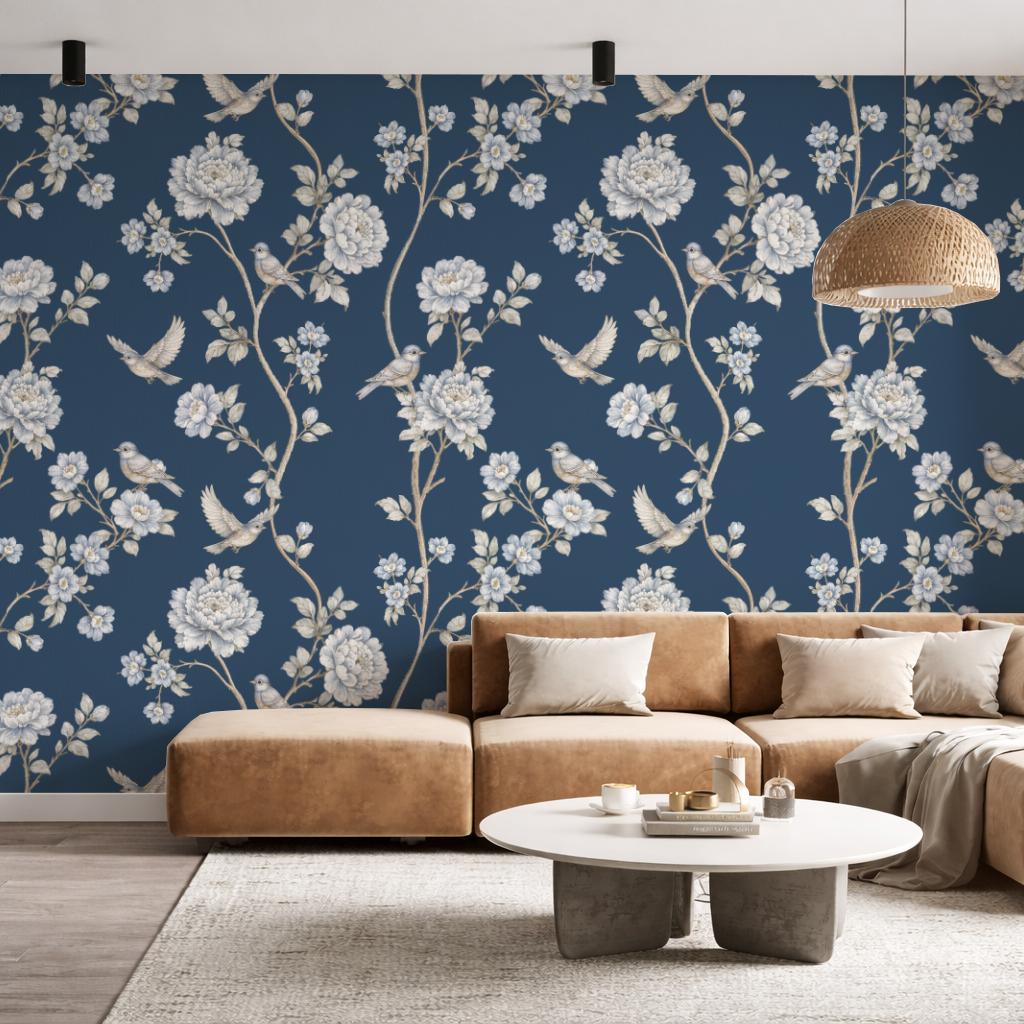
(Fun history fact: Women have been largely recognized as the primary drivers of residential interior design since this exact period in the 18th century!)
The Surprising Truth About Porcelain
While furniture and wallpaper were reserved for the ultra-wealthy, Chinese porcelain was surprisingly accessible to the European middle class. Why? Because of its utility at sea.
Porcelain is incredibly heavy and impervious to rot, making it the perfect ballast to stabilize ships on choppy ocean voyages. Because it doubled as a safety necessity, it was imported in massive quantities, making it one of the world’s very first mass-produced consumer goods. Even when Europeans discovered how to manufacture porcelain in the early 1700s, they couldn’t compete with the low prices and sheer variety of authentic Chinese imports.
War, Replicas, and the Shift to “Calmness”
As the trade gap widened, the history of Chinoiserie took a dark turn. Because China viewed Europe as uncivilized, they refused to trade for European goods, demanding payment strictly in silver. Desperate to get their silver back, Western traders began smuggling opium into China from India, exchanging it on the black market for the silver needed to buy more tea.
The resulting geopolitical tensions exploded into the 19th-century Opium Wars, grinding direct trade to a halt. To fill the void, European manufacturers perfected cheap varnishes, silk manufacturing, and replica wallpaper patterns.
As Chinoiserie transformed from restricted luxury imports into Western-made interpretations, its meaning shifted. It was no longer just about raw exclusivity; it became associated with a deeply thoughtful, exotic calmness—an escape from the gritty reality of the Industrial Revolution.
The Modern Revivals: From the Jazz Age to Today
Chinoiserie has never truly disappeared; it simply waits for the right moment to strike back against boring design.
- The First Revival (1920s): During the roaring Jazz Age, moody, exclusive speakeasies and salons adopted Chinoiserie to create an atmosphere of nighttime mystery and opulence.
- The Second Revival (1960s): The dawn of the Jet Age made global travel affordable for the masses, prompting homeowners to bring Asian aesthetic accents back into their mid-century spaces.
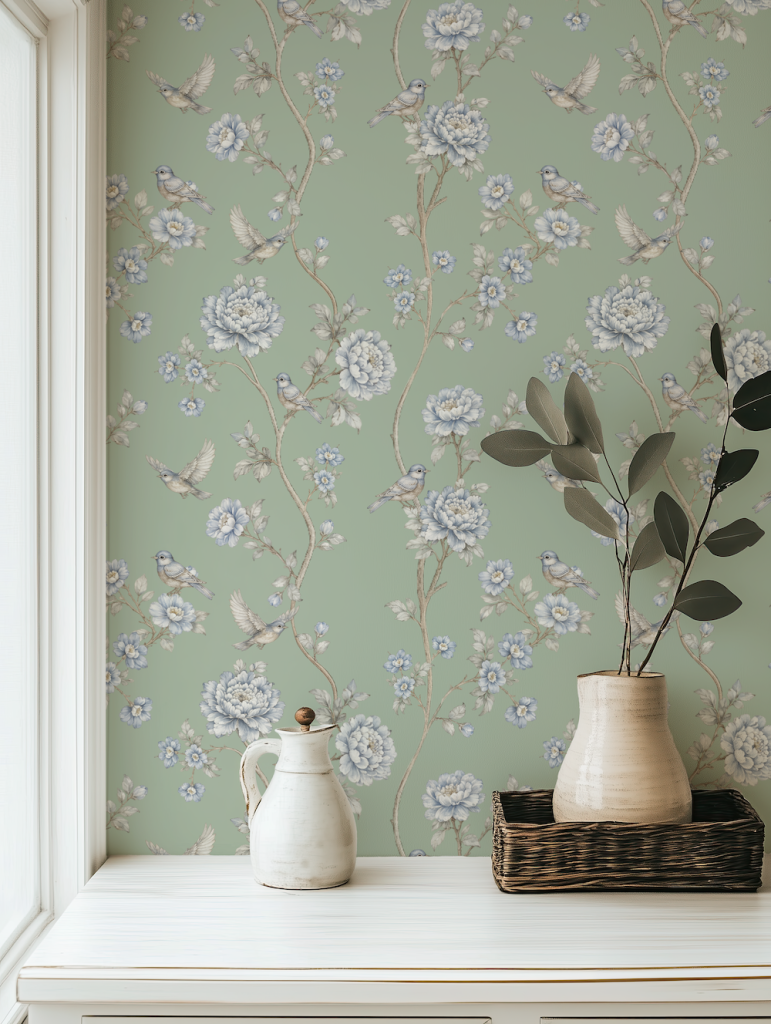
Chinoiserie Today: In 2026, we are witnessing yet another major revival. Today, Chinoiserie represents a loud, joyful rebellion against clinical minimalism. It offers a way to find tranquility through intricate floral patterns, hand-painted landscapes, and storytelling decor. Just as it did 300 years ago, a modern Chinoiserie room relies on a striking statement mural, a moody piece of lacquered furniture, and unique knick-knacks collected from a life well-traveled.